
Then the third angel poured out his bowl into the rivers and the springs of waters; and they became blood.
The Onion really outdid itself today, & I couldn’t have been happier.

Then the third angel poured out his bowl into the rivers and the springs of waters; and they became blood.
The Onion really outdid itself today, & I couldn’t have been happier.
Then I got up during the night, I and a few men with me; I told no one what my God had put into my heart to do for Jerusalem. The only animal I took was the animal I rode.
I was caught in that square little chunk of awkward time last night, that time where you want to go back to your bed from the library but the library is closing in thirty minutes anyway so why not just wait it out – I was in that chunk of time & I went searching for some book to scan; I came across the film history & theory section (add this section to the long list of sections, including Children’s Books and Hymnals, that I had no idea existed in our dear beloved Simpson), & fell into a brief history of the “greatest” horror films.
I scanned the Table of Contents & passed what I expected to see (Nosferatu, Invasion of the Body Snatchers, Psycho) in order to land on first The Texas Chain Saw Massacre (I love it when sometimes people spell chainsaw as two words) & second, Cannibal Holocaust, the latter of which really surprised me in the most joyful way one can be surprised (seriously, see this movie at some point – homework before you die). So anyway, the point of all this prologue is that I really dug into the Texas Chain Saw chapter & re-fell in love with that movie just by reading about it, discovering how weirdly it straddles the line between performance & reality.

A small handful of examples about what I mean: in what became a notoriously grueling scene to film on set, the Grandpa actor, discovering that it would take nearly seven hours to apply the necessary make-up for his character, demanded the “dinner scene” from the film be shot in one continuous take – one that ended up taking 27 hours to complete, at the end of which Gunnar Hansen (Leatherface, man I love Leatherface) remembers wanting to seriously “kill the bitch” (Sally, dear dear Sally) with Grandfather’s hammer; almost every major character sustained real-life injuries from the various acts of “performed” violence in the movie – when Jerry is knocked unconscious in the door-frame (AMAZING), the actor playing him found his head bleeding afterwards, & when Pam is hoisted onto the meat hook, she received bruises and other injuries from the harness necessary to create the illusion, & when Sally jumps from the window (for the first or second time, I can’t say), she ended up walking with a limp for several days afterwards [although a stunt-woman performed the actual jump through the glass, Marilyn Burns herself had to jump from the roof onto the ground in order to get the right effect of the actual landing].
If you & your friends (most of the “actors” in Texas Chainsaw were old Texas college buddies of director Tobe Hooper, after all) are filming a movie in which your character & your character’s friends are tortured and murdered, & you find yourself physically battered & emotionally unstable at the end of each workday…there has to be something somewhere that studies unintentional character-association acting (I think this is a fake term). There’s so much more to be said about the way this movie works in on itself (the mirror imaging the plot plays with, the whole idea of doubling & reversing actions to create a sense of hopeless timelessness, etc.!!); I can’t recommend losing yourself in this movie more.
I forgot to talk about Cannibal Holocaust – now that I think about it, I’ve already written about it at some point last year. I can’t tell you if I like it or not. Well, I don’t like it. But do I think it’s important? Incredibly so.
So, thus far on the Watch List: Texas Chainsaw Massacre, Cannibal Holocaust. Let’s keep track & see if anything that isn’t a horror movie/gore-comedy makes this list by the end of the year.
On my bed night after night I sought him
Whom my soul loves;
I sought him but did not find him
In searching the annals of YouTube this morning for live performances of one of my favorite modern (maybe postmodern? I don’t know anything about classical music) classical pieces, Penderecki’s “Threnody for the Victims of Hiroshima”(1960), naturally this meant coming across more Hiroshima victim Powerpoint slideshows than I ever hoped to see in my life. Smartly, I started one, realized what it was, & just as quickly hit the Back button. Dangerous waters, my friends, dangerous dangerous waters.
However, there is a point here. Maybe not a point so much as a YouTube video (besides, what better way is there to avoid making a point than to just “Anarchize” a Tube video? [I would argue that “Anarchize” is the appropriate verb to use when utilizing that funny little Anarchy feature]), but still you understand what I mean. Penderecki is Polish, & was 26/27 years old when he wrote this piece, written for 52 stringed instruments (which I’m pretty sure must all be destroyed by the time the piece is over. Or at least so out of tune that they might as well be thrown out anyway) & apparently has been used in Children of Men, which I haven’t seen (Yet.).
& what better way is there to characterize an utterly dissonant, loud, claustrophobic piece of calculated mayhem than with everyone’s favorite colorful lovable Care Bears!
[kml_flashembed movie="http://youtube.com/v/YO_CHjjOoGg" width="425" height="350" wmode="transparent" /]
Because there has been no rain on the land the farmers are dismayed; they cover their heads.
There is a concerned pronouncement around these parts – the parts of a college twenty-something kid – in the form of a question; an evolution cornered into a “say it right now, what do you say” moment. What’s your favorite food, someone might say, & it’s the kind of ice breaker that is easy because there is no real discussion, no thought into memory: you like dumplings, yea that’s neat, I like tomato soup; END. The arts will set fire to judgment, commitment, & the lack thereof (of both), though, & it’s impossible to not sound, in the words of the snobbiest English major’s best friend Holden Caulfield, corny. Every time the question turns to “What’s your favorite movie?” it’s the immortal (& immortally hilarious) “Does this make me look fat” cyclical joke; rather, it is an unanswerable question with a scoff attached on the other end (& there are two types of scoffs to the Art Audience: the “what a stupid answer” huff & the “I’ve never heard of that, you Art Snob” puff). We are all guilty of being on both ends of this, & for that reason I present to you a completely in-no-way comprehensive, utterly in-the-moment, against-my-good-judgment Top 3 Favorite Movies.
No.3] Vernon, Florida//the hour-long Errol Morris documentary that I swear could be “about” anything. I choose God, so sue me (or read the ten-page paper I posted below instead, it might be quicker after all).
No.2] The Texas Chainsaw Massacre//the original, not the remake, & pretty much only because I consider the way-too-long, way-too-dark chase scene to be the most thrilling film scene I could ever imagine. Also, on the DVD Extras (which I promise I don’t usually watch) there’s a deleted scene of a dead dog that the director found on the roadside & just started filming, so for what it’s worth that seems like the weirdest life/movie border I’ve ever witnessed being straddled (precariously, very very precariously).
No.1] Magnolia//just because there’s nothing like seeing William H. Macy being smashed in the face by a frog (min. 3:27):
[kml_flashembed movie="http://youtube.com/v/6sWJuQD0cL8" width="425" height="350" wmode="transparent" /]
Counsel in the heart of man is like deep water; but a man of understanding will draw it out.
“Those snakes can crawl over that water, just like they’re crawling over the ground. Some people says, ‘You swimmin’?’…Nuh-uh.”
And thus we have Vernon, Florida‘s pivot-point, its transition from a discourse on the intelligence of Man – his Reason & Will – to the Divine Plan of God. From this point on, it’s all Hope & Eternal Love, The Empyrean captured with a cheap camera through a pair of opera glasses. Rivers deepen, judgments are passed, prayer & condemnation are tossed together haphazardly, & that might be a lot of water out there, but yeah, that’s just the top of it. Because Erroll Morris is just playing with us at this point, tempting the viewer into quiet chuckles and little back-&-forth shakes of the head, waiting for the most vulnerable moment – that of our complete subjection to his cinematic desire – before the quick cut to God:
“God made all things, all things that was made. And he looked on it, & pronounced it Good, & Very good. But you can go to the extreme on anything. You can go to the extreme on anything, make a hog of yourself. But as long as you let it go like God intended it…he’ll give you power & strength & wit to take care of the deal.”
Suddenly everything stops & rewinds. Did he just say God? Well, what happened to the turkey hunter, or the man who keeps animals in a wire cage to trade & sell? Weren’t we just listening to a police officer in a quiet Florida town say that not much besides the occasional petty theft happens down here?
But God is ever-pervasive in Vernon, Florida, His form changing to fit the environment or the mood or the backlighting, but always there just the same. He begins right from the opening credits sequence: a black screen, names & titles coming & going, and a faint, nearly unperceivable noise. Crickets. The sound will become a theme, the Holy Soundtrack to an otherwise music-less landscape. Theirs is the sound of the Hope for a Beyond, their chirp-chirp a testament to the Divine nature of this life & the other. The men opening their stories, beliefs, & fears to the camera, these men live with the crickets pressing down on them at every moment, aware of the presence but comfortable in accepting it without questioning the source or purpose. The crickets are never pointedly exhibited by Morris in his film, & yet we as willing viewers understand their role: logistically, they create atmosphere & nostalgia, a seemingly innocent backdrop for a seemingly innocent movie.
But the crickets have a counter-balance, & it leads back to the original quote: “Those snakes can crawl over that water just like they’re crawling over the ground.” The Snake – that pesky creature of original sin, temptation, & torment – its presence is at times overbearing, temptation playing just as major a role in the lives of Men as God. Morris even places a character in Vernon with the name Snake, a silent hunter whose only words are heard as faint murmurs off-screen. His partner at points even remarks on the way Snake operates: “If he finds a fresh track, he’ll stop listening and go in on it.” Are none of us safe from Snake the hunter, Snake the temptation, Satan the Snake? And yet, avoidance of sin is said to be not only possible, but necessary; all it takes is to ask yourself a question: “You swimmin’?”
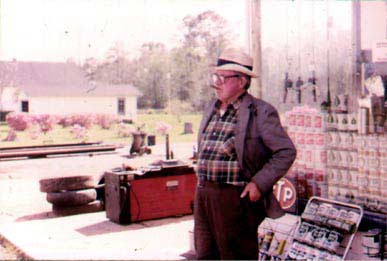
No statement on the existence of God’s love, however, is more complete than that of the lone paddler in the marshes of Vernon, Florida. The cut to his guarded, lit eyes is quick & entirely uncompromising. With a hat resting weakly on a withered scalp, one hand resting on a steering oar behind him & the other resting across his knee, he is nothing less than a Dantean chronicler:
“I never saw anything more perfect in my life than to see the perfection of God himself.â€
And suddenly we are thrust back into the meaning of God’s Divinity, the purpose of our own lives put on hold while we strive to first discover the source of God’s perfection. The verb here becomes the most important word in the world the minute you realize the implications behind “to see” when paralleled with the image of this man, sitting silent behind illuminated eyeglasses. The reflection of intense light that blocks any semblance of his eyes from the viewer immediately calls to mind the final four cantos of Dante’s Paradiso, in which Dante ascends to the final Sphere of Heaven & finds the love of God revealed to him. For Dante as a character in his own poem, God is revealed only through a series of bright lights that reflect the Heavenly Gaze like mirrors, until Dante himself is the light that reflects God; this light is the same reflection found in the eyes of the lone oarsman. In the final canto of the Divine Comedy, St. Bernard prays both for & through the poetry of Dante: “This man – who from the deepest hollow in the universe, up to this height, has seen the lives of spirits, one by one – now pleads with you, through grace, to grant him so much virtue that he may lift his vision higher still – may lift it toward the ultimate salvation” (Par. 33, 22-27). Dante’s “ultimate salvation” is the Oarsman’s “just happened”:
“Well I said, ‘That’s called – you saying, “that just happened†– let’s call that God, let’s give it another name.’
That’s what God is: just happened.â€
The enlightenment here is that of a man whose understanding of God is at the same time comforting & comfortable, creating a complacency within him that could just as easily be mistaken for naïveté; this would be a disparaging mistake to say the very least. For the characters of Vernon, Florida – no, for the citizens of Vernon, Florida – God is that whose presence is both unrecognizable & undeniable, a thought that serves not merely as speculation but as a way to live – as a way to stay alive. And still some men find they are able to achieve a connection with God through an understanding of their purpose. Henry Shipes, the turkey hunter whose stories relate the suspenseful, orgasmic highs of finding oneself alone with an unaware “gobbler,” serves the purpose of Man as He has realized The Vision. His constant allusions to the very basic instinct of bewilderment when lost in the woods again brings to light comparisons to Dante’s Divine Comedy. The poet’s words from Inferno again reflect the humanity of the pinpoint of light on Earth called Man, or in this case, Henry Shipes: “Ah, it is hard to speak of what it was, that savage forest, dense and difficult, which even in recall renews my fear…but to retell the good discovered there, I’ll also tell the other things I saw” (Inf. 1, 4-9). Shipes speaks with the same poetic air of confusion when faced with Life’s great purpose, if only with different words:
“Around in them pines, everything looks alike. To me it does…you can’t tell where you at.”
And yet to cite the turkey hunter only as a human is to ignore the big picture. After all, Shipes is ultimately the story-teller in the film, the blue pen in his breast pocket a symbol not only of his ability to weave a tale with sufficient suspense, thrill, & climax, but of his status as He with a story to tell. His experience is evident in his demeanor & tales, & yet this complicates matters sufficiently, for he serves as both Dante the Lost Man & Virgil the Wisened Guide. Perhaps this is exactly the point, however; maybe only once Man has lived may he relate his life to help better serve those who have not yet reveled in the joy of experience of purpose.
It seems to all return once again to the same oarsman, however, for he is the one who is The Vision, not simply a realization of some semblance of it. With one hand directing the boat – & thus directing the eyes of the viewer, thus directing the surroundings – he steers around what can only be described physically as post-apocalyptic. In the introduction to “Film and Reality” in Film Theory and Criticism, differing cinematic considerations of reality are described. At times in Morris’ film it seems the most pertinent of these is that of the anti-realists, who believe that “film, like any other art form, must offer an interpretation of the world or, by the manipulation of the camera, create an alternative world” (Braudy 136). Without camera manipulation, however, Morris manages to create an alternative world, one that before seemed only purely speculative: the world of the afterlife, or maybe of the after-death.
Because the oarsman is moving cautiously but without reservation through the End of Days, & yet he manages to be the light among the dark waters & darker trees scattered throughout, seemingly old, bent & breaking. The lighting in the scene, gloriously bleeding from the heavens over the face of the oarsman, blinds his eyes from the viewer & offers even more reason to assume his role as some vision of God’s intent, if only perhaps serving as a messenger for the cause. Despite all this imagery of the light from Heaven, the torn forest surrounding the Divine, the physical realization of the End of Days, the most important aspect still lies in the sound.
For when the camera cuts to this terrifying (& yet beautiful…terrifyingly beautiful?) vision, the Holy Soundtrack suddenly ceases. The crickets, perhaps finding themselves no longer necessary to provide a backing as the unseen spirit now that the Spirit has shown itself through The Vision, are soundless. From a cinematic viewpoint, the elimination of the crickets is merely coincidental, caught on camera only because the timing of day was specific to the cause or because the area houses less crickets, etc. The effect here, then, is one found in the editing, with only two cuts made in the entirety of the 2+ minute scene, one into a close-up of the oarsman’s face & the other to return to a more mid-range view, putting his two hands back in sight.
But if we are to assume this is all post-apocalyptic, then what purpose does the Vision have in being there at all? His eyes filled with God’s glory, blinding him & at the same time reflecting the image of God through him, his place after the end of the world seems unsure. It’s possible that his demeanor is a mocking one, his relating of a conversation concerning the reality of the Divine seemingly coated with hidden smirks:
“‘You believe you’re here, don’t you?’
‘Yeah, I believe I’m here.’
Well I said, ‘Do you believe any man on Earth made you?’
‘No, I didn’t make me.’
I said, ‘Do you believe any man on Earth made Adam & Eve?’
He said, ‘No, I don’t believe it.’
Well I said, ‘What made em? How come I’m here?’”
Could it be possible that the oarsman is having this very conversation for the purpose of allowing “Mr. Dee” the chance for total conversion to The Vision he possesses? Or perhaps the story serves as an allegory for the viewer of the film itself, a sort of warning from God, much like a telegram from the future – or from the end of time. The oarsman in this scene, however, serves an odd parallel to allusions of historic & mythological oarsman, most notably the soul Charon, who rows damned souls across the River Styx in both Greek mythology &, not surprisingly, Dante’s Inferno. If the oarsman typically serves as ferry for the damned in Hell, than how does one explain the Divinity flashing through the eyes of Vernon, Florida‘s oarsman of the post-apocalypse? Perhaps it’s just another way of explaining away misrepresentation or the lost meaning of that which we have understood to possess meaning all along. Is it really a coincidence that following the oarsman’s scene we find the star photographer saying, “Maybe a diamond don’t even shine, maybe it’s just the way it’s cut”?
The transition at this point in the film veers a bit into a slightly less comfortable realm, that of the distinguishing differences between Faith & Free Will, the latter of which is generally dealt with as just an after thought of the Divine Plan in Morris’ film. After all, at its most basic foundation, “just happened” standing in for God is not much different from the explanation the star photographer gives:
“Luck, you know; I mean, when somethin’ turns out, you say, ‘Gee, I’m lucky.’ Right?”
This question is open-ended, though, & thus The Vision, the acceptance of Life in God’s hands, is either incomplete or misunderstood. Or perhaps it’s both? After all, when the film comes to an end, there’s no real surprise who’s given the final words: none other than the Dantean story-teller, the turkey hunter himself. If the oarsman is a representation of an understanding of God & The Vision shown to the enlightened, then Henry Shipes is Man’s journey to reach enlightenment. His acceptance of Life’s Purpose shows a recognition of what Dante himself considered a natural bond between God & Man created by God’s Love, & his tendency to relate stories & characters is all of that which is human in him. His final scene finds him journeying through lonely waters, gazing towards the heavens & considering the purpose of life’s hardships, wondering earnestly why in order to gain spiritual purity & understanding, one must first struggle. This becomes the eternal & inevitable fight within Man, to discover God’s purpose by realizing first that He indeed has a purpose through it all; it will always be Man’s great yearning, to “wish there was as many turkeys as there are buzzards.”

We turn now to my fellow bloggers, & face their decisions & implications on the matters of God, reason, purpose, & Vernon, Florida. The most interesting argument concerning any aspect of the film is found in Robyn’s post concerning the syntactical limitations of language & understanding. Deciding to focus mainly on how Man defines both the structured & indefinable, she asks the questions that really get to the point of the matter: how we do define something? How do we define someone? What if a gopher is really a turtle? What if a boy is really not a boy at all…at least not entirely? Her analysis of the situation boils down to essentially my same views on the topic & are more revelatory concerning my issues with God & purpose than they may seem to be at first. After all, is it incorrect to imply that what we assume to be only crickets could be the faintest trace of God? Both are imperceptible without close examination, both are accepted & understood by only the few who choose to tackle the issue, & yet both are still recognized as being. Perhaps the answers to Robyn’s questions don’t have to do with the naming of things, but rather with the realization that there are things & they simply are. This isn’t to imply entirely that labels or definitions are utterly obsolete, but rather that the understanding of them only by these labels is unimportant. Herein lies the over-arching message that I feel with all my heart Vernon, Florida is attempting to relate to the viewer: accept the unknown not without hope, but without submission.
Because to ignore possibilities concerning the world both divine & earthly simply on causal terms not only shows an ignorance of the mind, but surely ignorance of both faith & the heart as well. One of Ben’s blog posts concerning Morris’ film touched on an issue relative to this subject: that of the importance of pride & the will of man. His statement concerning the amount of pride each character in Vernon, Florida has touches on much more than I think he might have been aware of when originally thinking about it. Theologically, pride is generally considered to be the original & most important of the Seven Deadly Sins, often thought to be the source for the remaining six, as it involves an excessive love of self to the point of contempt for others. If this is true, the characters in Errol Morris’ film are each sinful in some excessively romantic way. In many cases, I can see where this might be the case – the turkey hunter’s desire to charismatically relate dramatic hunting stories; the need to keep wild animals in a backyard cage for the purpose of sale & exhibition – & yet for some reason I can’t help but think that the sins are not cause for damnation, but only for gradual purgation. Each man in Vernon is ultimately full of a recognition of God & speaks with an intense awareness of some Divine Plan, & thus lives with the redeeming qualities of faith, hope, & love. Even if prideful, the mere desire to understand some vision of God is cause for complete, eventual redemption.
And yet still complete understanding is forever elusive to Man, considered with unmatched beauty & mental intensity in Mary-Carolyn’s post about the portrayal of Morris’ film characters as forms of God. In her comments, she manages to think about the most poignant of questions in matters of the Divine: “How do you, anyway, represent someone/something who is all-knowing, all-seeing, and all-powerful.” This again (yes, AGAIN) brings to mind Dante’s work in the final moments of the Divine Comedy, in which his vision of God is perpetually inadequate, only possibly existing through a string of metaphors. When Dante finally reaches The Empyrean, his vision of God is a flowing river of bright light until the moment when the light begins to circle in upon itself & create the shape of a white rose. Blessed souls fly excitedly around the scene as God’s form again changes through Dante’s poetry into the form of three circles of blinding, indescribable light, a final & complete description of that which Dante has no accurate words for. In this sense, the answer to Mary-Carolyn’s problem is that there is no way to show God, only a way for God to show himself; in the case of Vernon, Florida, the Vision of God is the slow oarsman, bathed in light & full of divine paradigms.
But still there is a blog post that brings everything back down to the base level, where thoughts are gloriously untroubled & happiness is anywhere you please. Nathan’s post on the film in general is the beginning & end of the ring of characterizations we as a class associated with Morris’ film, & his notes on humility & pleasure are the most simplistically wonderful. The depth in this post is found in the language: the words “human,” “genuine,” & “value” are praises to God in their own right, practically screaming down the reader to alert them to the merits found within. Because despite all the talk about divinity, hope, & the search for God in something (anything!), Vernon, Florida is really just about the human, & considering the fact that this follows the path of a person & was completed with human intellect, the consideration of the role of humanity in the film is one of the most important. Even if these people are real & yet still characters (as Ben said), & even if they choose not to fully comprehend the importance of understanding that things just are (as Robyn implied), they are a genuine reflection of God’s love. Their value, it is important to note, does not lie automatically within themselves, but rather has been molded with an editing process that serves the purpose of preserving the nature of Man as both original sinner & blessed individual. Nathan calls the citizens in Morris’ film “adorable,” but at this point I’ll opt for true, because after all the debate about truth & reality in the world of the neo-realist documentary filmmaker, I’m betting that no man is truer than he who has come to terms with a personal understanding of his connection with faith, hope, & love. And yet still these words return to haunt me:
“Reality? You mean this is the real world…?”
So then death worketh in us, but life in you.
Robyn,
There are two fascinating points that you bring up:
Are we only products of the products we create? & Why Jennie? The first question, I think, is one that’s been the foundation of so many social movements that at this point it’s almost chic to keep talking about it today. Not only did the idea spark the punks to expand, form, & reform their sounds & ideas from Frank Zappa in the 60’s to the Sex Pistols in the 70’s to Minor Threat & the DC hardcore scene from the 80’s to today, but the violence – both materialistically & socially – brought on by the concept has been a little shocking. But really, I don’t see how shocking it can be once you realize how chilling it is to think about: if we are only products of that which we produce, then why do we exist? Yes, I think everything has a purpose, but is it possible to discover ours if we only matter in relation to the “product”? Or better yet, is it NECESSARY? I think it’s important to not only figure out yr creative SOMETHING but to figure out the purpose of yr something as well; it’s there, you just have to pull it out.
Yr second question – Why Jennie? – is a little harder (not that I answered the first one at all), but I don’t think Jennie matters to the book thematically, only structurally. I think she is essentially that funny word that Dr. Campbell used to describe something that seems to be “the point” at first but actually doesn’t matter. I can’t remember the word right now, but maybe it’ll come to me later. Jennie is the muse, but she is also the downfall, the pivotal moment of Love’s ultimate aggression on the soul of Man, who himself is almost lured to death. It isn’t that she is a woman, but that she is a mystery, & being a mystery enables her to be THE ONE – that thing that evokes Eben’s work.

Thanks for letting me borrow Vertigo; I didn’t think too highly of it. The plot progressed slower than molasses in wintertime, & I really didn’t care in the end. The final scene didn’t make sense, either, it seemed anti-climactic & ultimately unecessary. Any theories on that final death? I don’t understand it & don’t really care about understanding it, either. It was just one of THOSE films.
Brad
And Moses stretched forth his rod over the land of Egypt, and the LORD brought an east wind upon the land all that day, and all that night; and when it was morning, the east wind brought the locusts.
Robyn,
Yr response seemed pretty much like what I would expect, until you hit me with: “It’s people who are the something, not an idea that they might have.” I can’t tell exactly where yer going with it, but I really like the idea of it. Does it imply that the creativity – or “singleness,” if you will – of someone stems directly from that which lies only within themselves? Ok, no, what yer saying is that nothing inherently “lies” anywhere, that the “themselves” (“yrself,” “myself,” “ourselves”), THAT is it all along! Does this mean that Eben’s work with Jennie transcends time after all, that in fact to receive money for his work becomes a redundancy, & that the charm of his “masterpiece” – his Portrait of Jennie – is a charm coming not from her or from him specifically, but from “it”?

This would mean that the subject & artist are both obsolete, “artist” being used here to mean anyone who does anything resulting in a product – writer, fisherman, coal miner – & that the creative function of art itself is in fact meaningless as well. If everyone is creative, then no one is creative, & yet if no one is creative then perhaps creation does not exist at all. Might I propose that it exists but does not matter? That way, this letter – this potential blog post – THIS is my ingenuity, my purpose behind taking this class, behind speaking to you, behind EVERYTHING.
Is yr head spinning as quick as mine?
Brad.
But I have understanding as well as you; I am not inferior to you: yea, who knoweth not such things as these?
Robyn,
I was thinking a discussion of sorts might be in order as to the role of acceptance in Man’s personal internal relationship; perhaps a blog-scussion, to leave room for consenting/dissenting voices from class?
In my eyes, it seems to be the age-old idea of remembering only those who have a story worthy to record, or at least this is what good ol’ Dante proposes – he in fact spends just about the entirety of his trip through Hell discovering souls who plead to be a part of Dante’s writings. Some of them are worth it, & others (see: Corrupt Popes) are so despicable that not even words should be spent on them. Since I can’t help but connect everything I read at this point in my life to Dante, I noticed the correlation of Eben’s fame to Jennie’s life in Nathan’s book, & was wondering how necessary recognition is. Is it possible that fame only comes with originality, & the fame of an originator is what sparks unoriginality in the first place? Personally, I can’t help but hoping that everyone’s got something original to offer the world, & hope that this original SOMETHING will bring recognition, but perhaps originality is only that which can be earned? I guess I’m proposing that creativity – which I tend to equate with originality, although I can understand why one wouldn’t want to – is inherent in a child based on the type of bearing he received growing up, & that it is possible to find this original SOMETHING in yr life…no matter how many days or months or years it takes. Was wondering about yr sentiments concerning this; are we all original on our own, sticking to “crowd mentality” only for selfish, obscured reasons? Let me know,
Brad

Then the king gave orders, and Daniel was brought in and cast into the lions’ den. The king spoke and said to Daniel, “Your God whom you constantly serve will Himself deliver you.”
3 or 4 years ago, when my sister lived in Athens Georgia, she was dating a young illegal immigrant who worked different jobs to send all the money back home to his family, & my sister, she was sure she loved him. She wasn’t in school there, tho, & when she decided to go to art school in Boston, she was worried about what would happen between herself & her boy. I remember she spoke with my mom about it & my mom expressed her belief that there is someone for everyone in the world & you will know you have found the someone if they’re always there, coming back again & again after everything else in life. If my sister’s boy was the One, he would be for her, waiting until she got back. It caught me off guard because I had never thought about love that way. I thought it was a storybook suger-cookie idea, & I didn’t expect my mother to be one to say she believed in the concept of the One.

I thought about it a lot, & I still think about it a lot, & I think as of this point, I do believe in a mate meant just for you. It’s endearing to have to be on yr toes all the time when it comes to love, always wondering if that girl or boy whom you never say hi to on campus walk or in the cubicle next door is going to be yr partner someday. It’s like playing cards with yr heart, waiting for it to take its turn & getting really frustrated cos they’re one of those who take forever to take their turn. But when they do make their move, it’s a big one & they win. That’s how I like to think of it, at least.
As for Portrait of Jennie, I think this mystifying relationship of uncertainty is what keeps the story moving along. Not knowing when his lover is going to show up next, but willing to wait for an enternity to find out, this is what keeps you flipping the pages & really wanting for Eben to find his true love in Jennie. It doesn’t matter to me if she’s real or not, or how it’s possible that she’s real. I think the point is that it’s Love with the capital L, that it’s the One with the capital O, & that it’s Forever with the capital F.
Oh, & my sister? She broke up with her boy.
The earth was formless and void, and darkness was over the surface of the deep, and the Spirit of God was moving over the surface of the waters.
I have just napped for one hour & had the most astonishing dream that I can remember having. The logistics are a bit spectacular (in the scale of something being large, not of something being “cool”), so I’ll try not to get into them so that I have time to tie it into Morris. Trust me, I can.
The basic line of my dream followed my body as I went to see a movie. The film starts, & I am seated in the plush movie theater seats we all know & love, watching a scene of natural airs unfold on the screen. A family on a campground somewhere vast, on a mountain where there are pines & oaks & not much activity besides the chatter coming from their camper. The camera cuts to following a young girl – belonging to the camping family – as she walks slowly & quietly through the woods, investigating the area. She comes across a man who is on his knees in the midst of old, dirty camping gear, weeping over the rag-doll body of a dead child in his arms. He looks up at her (& thus looks up at the camera, as it is from her view), & the camera cuts to the girl’s father, gathering firewood somewhere else on the mountain. His son runs up to him & asks him where Mother is, & (this part I haven’t figured out yet), the camera cuts to a close-up of Father’s face, suddenly with a shocked/worried look on his face. He drops the pieces of wood he’s carrying right where he is & begins to run up the mountain. The camera cuts
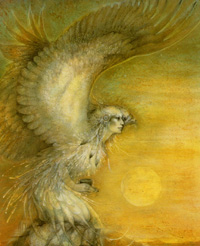
quickly to following the mother up the same path that her daughter had taken when she had discovered the man with the dirty camping gear holding a dead child. This time, the mother discovers the same man, only he is walking out of his tent as the camera pans right, following Mother’s gaze. In the dirt behind the tent, the camera can make out 2 or 3 bodies lying still, one of an older woman & 2 little girls. Camera cuts to several quick, gruesome images of the faces of these bodies, dirty & blank, dead, & the final image that is flashed, held for a little longer, is that of Mother’s little daughter for whom she had been looking. The man now advances slowly towards Mother, grinning, as she backs up cautiously but with resolution in her eyes, seemingly unafraid (which I can’t explain). The camera is now faced towards her, from the view of the stranger, & it follows her as she reaches the end of the mountain (a cliff on the edge of the stranger’s camping area), turns around, & jumps off. The camera continues to follow her through the air, as she grows a huge pair of dark brown eagles’ wings & plunges headfirst into a large body of water at the bottom of the lake. When she hits the water, the camera cuts to an underwater view, where we can see that she has transformed entirely into an eagle, & in the same body of water there are several other eagles floating motionless around her; it is a pool of dead eagles, fallen from the cliff. Apparently, this is where the movie ends, & I come to the realization that the audience (including me) is now floating downstream in a large pool, towards the theater’s exit. It doesn’t seem weird to me that our seats have been turned into water until I wake up.
This dream speaks to me on so many levels concerning Morris’ views on both cinematic presence as well as the ties that bind truth, reality, & evolution. Because if this dream is untrue, then is it unreal as well? Can it be possible that just because it is labeled as a dream it is inevitably considered as unreal, a reality schewed perhaps, but unreal all the same? Personally, I don’t see how anything can be shrugged off as a product of a false reality, or why a woman cannot turn into a eagle as a sign of some matriarchal martyrdom, crashing gloriously into a soft bottom of water & rising bubbles. People exist, tents exist, eagles exist, water exists, even the concepts involved exist: a murderer, a truth revealed, worry & resolve. Where does this become something not real? When does truth cease to become a piece of this puzzle? If the imagery is vibrant, the emotions crushing (I’m still not over what happened), & the allegorys muddled, mixed & confusing as all hell, what differentiates it from any other piece of art. Could it be that dreams are pieces of accidental art? The interesting thing, I suppose, is that it was really a dream of me watching a movie, putting to the test the old notion that cinema is like a dream (the uninvolved spectator, etc.). But I swear it felt real, & I swear I was on the verge of tears when my alarm sounded.
