Save others, snatching them out of the fire; and on some have mercy with fear, hating even the garment polluted by the flesh.
This post is subtitled “Why Pop Songs Mattered in 2008,” but in all honesty it’s an overall misleading subtitle & so I may just end up scrapping the idea of using a subtitle at all. But seriously pop songs really mattered in 2008! And there are three reasons why.

1. They proved we really are the most post-modern generation after all.
“We” really means “me & kids my age,” but that doesn’t matter in the end because even if it’s my generation, every other living generation exists in spheres around this one — my own — & each of our generation’s actions & products affect all others. These effects include one generation’s recognition of and vested interest in its own products, a self-reflexivity that was mirrored brilliantly in 2008 in one of its golden boys: T.I.
Yes, I recognize & understand clearly that hip-hop at its very core is a genre of music founded on the borrowing from other snippets of artistic effects, but rarely before has a song become so pop-culturally lauded for borrowing from a snippet of a snippet of an otherwise completely unknown, unimportant effect. Let me explain. T.I.’s song “Live Your Life” was one of this year’s biggest radio hits, reaching #1 on the Billboard charts & reaching Platinum sale status (the song alone! Not even the album from which it was pulled! But that’s a whole nother post). The song begins with a sample of the song “Dragostea Din Tei” by the Moldovan group O-Zone, a song that, though it was a hit throughout Europe, holds no real cultural significance in America besides being the subject of arguably the most popular YouTube video of all time. This is the “Numa Numa Kid” video that changed the whole game of YouTube to begin with; not only did it make a hero out of an embarrassingly hilarious, overweight man with small headphones, but it spawned an innumerable amount of spoofs & responses, practically inventing the necessity for the “YouTube Response.” This might not have been the Internet phenomenon to start all Internet phenomenons, but it will certainly go down in the history books as one of THE biggest videos this generation has produced (& there are so, so many…).
Regardless, the insertion of a sample from O-Zone’s song is not so much a consequence of T.I.’s vast musical knowledge (nor is it a consequence of his DJ’s knowledge, as very rarely does an emcee ever pull a Rakim these days & actually make his own music) as it is a consequence of an enormously post-modern culture weighing in on pop radio. The song opens up with the immediately distinctive “Maya-heeeee, maya-haaa” that this generation has come to know so well, borrowing not necessarily from a song that has an interesting or unique sound that would emphasize the strength of a beat, but in fact pointing out to the listener that hey, million-dollar rap stars are just like everybody else. They watch YouTube, they laugh at chubby kids lip-syncing in font of a computer. And this generation’s public responded brilliantly, launching the song up the pop charts & pumping the song out of each & every speaker within reach.
[kml_flashembed movie="http://www.youtube.com/v/4vxbNi80QXQ" width="425" height="350" wmode="transparent" /]
I did exactly the same thing. Because, quite honestly, that song is really damn good. And Rihanna will never cease to be attractive. Probably ever.
2. They proved the love song will never die.
And do you know why the love song will never die? Because the people who are making the most popular love songs today (and probably the best love songs today) are younger than even me. All three of them.
Okay, technically, Kevin Jonas is two & a half months older than me, but I refuse to consider anyone posing in Tiger Beat as being my senior.
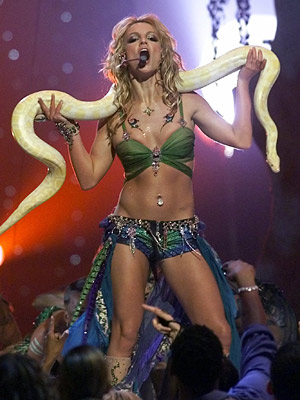
In 2008, though, a year that saw a continuance in the world of pop radio of rock songs lamenting love lost & of hip hop songs flaunting money & of country songs disappearing before our very eyes (as hard as it is to listen to one of his albums in its entirety, Alan Jackson might continue to be the last true bastion of modern country music. Chuck Klosterman once called pop country “Wal-Mart country,” implying country albums that sell out in Wal-Marts across the nation, & Jackson makes more than anyone can count, God bless him), the Jonas Brothers exploded onto this September’s Video Music Awards with a premiere of their new single, a Sesame Street-esque rendition of “Lovebug.” At the time, I was actually watching the VMA’s for the first time since that one where Britney Spears carried a big yellow snake onstage (that shit was sick as anything, too), & had both very little knowledge of & very little interest in JoBros. Like most of the country, I was sick of them without having even a clue of what their music sounded like.
But this song was something else; the chorus is sung quietly, a breathless confession about a lovestruck someone losing their breath. It’s a cheap lyrical trick, & it’s one that will always work. And these boys know this, & perhaps this is what makes them geniuses. I would say it’s what makes their marketing men geniuses, but (mostly because I’m making a point here somewhere) because these guys are actually writing their own songs – a rarity in the world of tween pop music, perhaps predictably so – it’s all on their shoulders. And most importantly, they know how to sound innocently in love because they are innocent — the completely terrible & surprisingly uglier-than-expected host of this year’s VMA’s spent an unnecessary amount of time picking on the three of them for sustaining from having sex until marriage. The complete backlash that these statements caused forced the host to later apologize & retract his “funny” comments, & cemented something in the minds of every member of this generation: the Jonas Brothers are one of the most abnormal groups making pop music right now, for their complete admonishment of the current cultural norm of blind promiscuity if nothing else. They’re making love songs without making love, & somehow this is the most unpredictably genius strategy anyone has come up with in recent pop music history.
[kml_flashembed movie="http://www.youtube.com/v/_PZ1Wh0jV-E" width="425" height="350" wmode="transparent" /]
As for the song changing gears 2/3 of the way in & going Dylan-electric, it grew on me. These guys know what they’re doing, & this is what’s going to keep letting them do what they’re doing for countless generations. Catch this lovebug again…& again & again & again.
3. They reminded everyone that no one makes better singles than Beyonce Knowles.
Not including last year (I guess she was on her honeymoon with Jay-Z, I donno), Beyonce has made my favorite pop single every year since the release of her debut album Dangerously in Love. “Crazy in Love” was my jam junior year of high school — it was everyone’s jam, really, & it will probably go down in history as one of the greatest lead-off pop singles an artist has ever released (in my mind, at least). Senior year was the year of “Naughty Girl,” which, although it isn’t in the same league as “Crazy in Love,” it didn’t really need to be. It was a follow-up single, was hot enough to get anyone & everyone dancing, & became my favorite because it borrowed from the strangest song in pop single history: Donna Summers’ “Love to Love You Baby.” Two years ago, there was “Irreplaceable,” a song that I played on repeat more than any other song I have ever played on repeat. It was heartbreaking, it was crafted with every little piece in place for a very specific reason (all those “whoa-oh”s, give me a break! Those things killed me, every single time. Always.), & it had two false-start choruses before the real one ever even came in…each time it came in. I did not think a song could ever top “Irreplaceable,” & I’m entirely certain this is why Beyonce took a year off before releasing this year’s “Single Ladies (Put a Ring On It).”
[kml_flashembed movie="http://www.youtube.com/v/8mVEGfH4s5g" width="425" height="350" wmode="transparent" /]
With the best beat her producers have come up with since “Crazy in Love,” the harmonies in the line “don’t pay him any attention,” & a music video in which nothing happens but Beyonce dancing in a leotard & high heels (I know: what?!?!), “Single Ladies” is this year’s best song by 3 million miles, & will continue to be the best song on the radio until next year, when Beyonce comes out with the defining song of 2009-2010.
The anticipation alone is going to make this a very, very good year.

 Mostly I’ve discovered it’s a matter of relevance & calculation – find one aspect of television you deem worthy, look forward to it, & sit down & watch it. For the past month, this calculation has been college basketball, & there are few things in life that can pull me out of my seat faster than a buzzer beater. In this way, the NCAA tournament becomes a strictly visceral experience, an Artaudian experiment of popular culture: find a language, a method, that moves the audience to their feet, moves them to tears, to expletives – find this & you speak directly to the hearts of man.